Rethinking Compersion: How Sex Work Fits into the Non-Monogamy Ecosystem
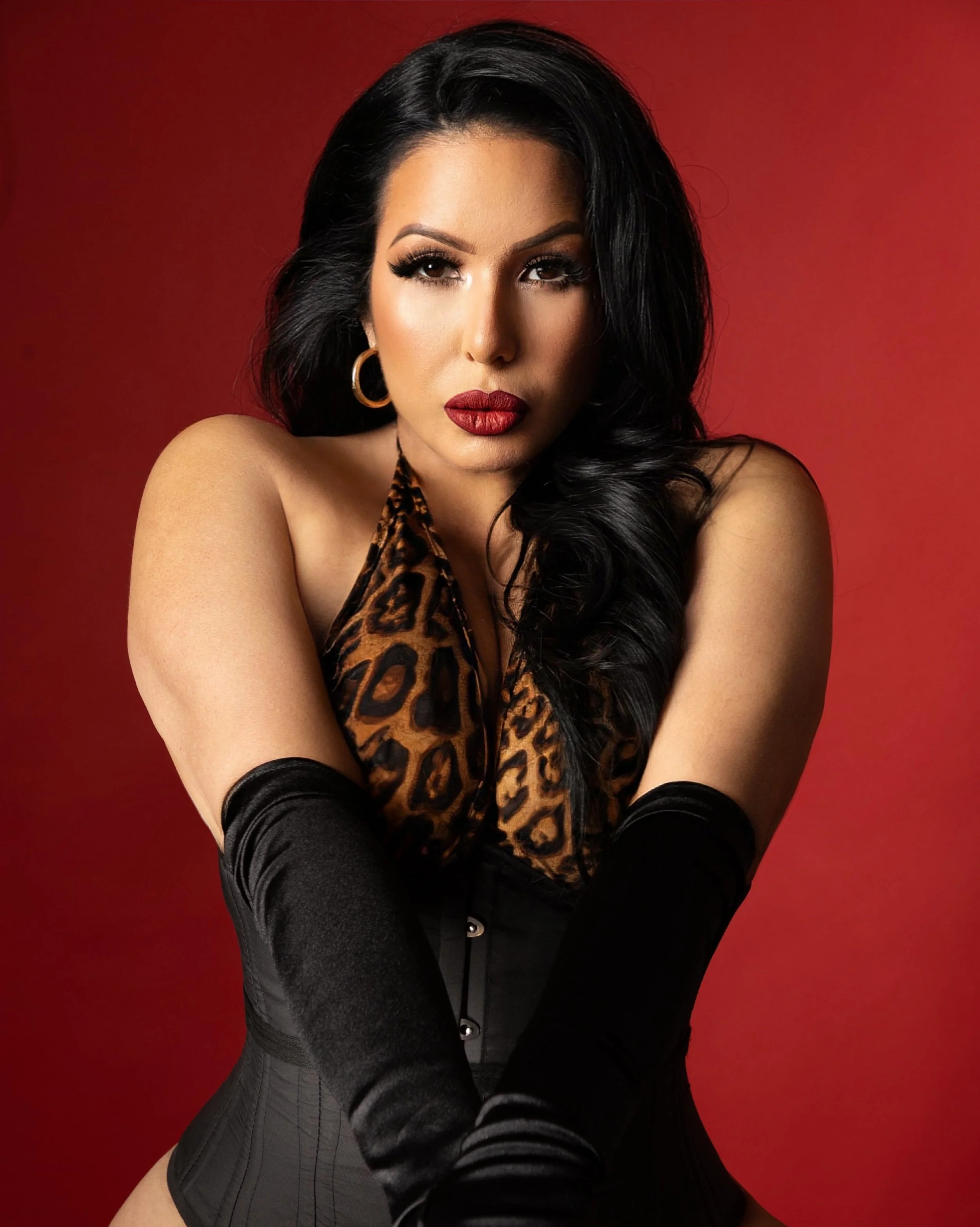
When people talk about Ethical Non-Monogamy (ENM), they usually bring up polyamory or swinging. They talk about self-help books, radical transparency, and endless emotional processing. But there is a massive piece of the non-monogamy umbrella that therapists, dating apps, and the public completely ignore or heavily stigmatize: sex work.
I’ve been a sex worker since I was 17. I started out underage out of pure survival as a single parent when times were hard. Over the years, I’ve done everything from dancing as an adult entertainer to transitioning into online work like OnlyFans and phone sex, while building up my vanilla income through rental properties, my Substack, and other investments. I’ve lived in this world from the inside out for decades.
My first proper introduction to non-monogamy wasn't from a textbook; it happened on the club floor when I was a stripper. I noticed couples coming into the club together and buying lap dances. Sitting and talking with them, I realized the women often enjoyed the experience the most. Many of these couples had been together since high school, enjoying the entertainment together without jealousy.
Around that same time, I danced with sweet, open-minded Canadian girls who came down to Florida. The local swinger community welcomed me, thanks to the Canadian girls who were known swingers. They mentioned places like Caliente in North Tampa. They shared stories about orgies, party dynamics, and how their husbands had zero issues with them dancing or being with other partners.
That was the very first time I learned about compersion—finding joy in your partner’s pleasure with someone else. Seeing that level of warmth, openness, and lack of shame at a young age made non-monogamy feel welcoming. I felt no fear or shyness toward it.
However, sex workers often experience compersion differently than swingers or polyamorous individuals do. I can only speak from what I have witnessed over nearly three decades in the industry: sex work is work. It is a profession, not a lifestyle. Relationships with sex workers require a unique understanding. While there is overlap with other forms of non-monogamy in the need for clear communication, trust, and boundaries, sex work remains a profession first.
Because sex work is labor rather than a personal lifestyle choice, compersion in this space isn’t necessarily about deriving pleasure from a partner’s sexual acts with others.
Instead, compersion here looks like active pride, emotional security, and celebrating a spouse’s professional success, supporting their work, attending industry events together, and taking pride in their achievements without letting personal ego or insecurity interfere.
Where things actually fell apart for me wasn't sex work; it was vanilla dating. Every time I got into a relationship, the same toxic pattern played out. Guys would act like they were fine with my work in the beginning, but then the passive-aggressiveness and drama would start. They never truly took the time to get to know me as a person. Instead, they projected false assumptions, convinced themselves I was "doing more" than I actually was, and would withdraw or get angry instead of communicating.
I ended up in two failed, devastating marriages because of this friction.I took responsibility for my growth. I went to therapy, did Cognitive-Behavioral Therapy (CBT), read the books, and worked hard to primary clear, effective communication. But going to therapy didn't make dating any easier, because each relationship just became harder and harder. You cannot communicate effectively with partners who refuse to do their own emotional homework. I took responsibility for my healing. Therapy gave me healthier communication skills, stronger boundaries, and deeper self-awareness, but therapy couldn’t make the people I date do their own work. As I became healthier, dating actually became hardened because therapy failed, but because my standards changed. Therapy gave me the tools to recognize incompatibility sooner, making me far less willing to tolerate unexamined insecurities, controlling tactics, or emotionally unavailable men.
Eventually, I realized mainstream sites like Hinge and Match were useless for me. I tried open-minded platforms like Feeld and swinger sites like SDC (which I currently use for affiliate work), but even there, men constantly get it wrong. They hear "sex worker" or "non-monogamous" and think it means a boundaryless free-for-all. Many people throwing around the term "polyamory" on these apps haven't done an ounce of therapy or CBT work. They don't realize the massive amount of emotional labor required. The lack of understanding runs deep, even down to basic income and independence. I’ve had men act like I was looking for someone to rely on, when the reality is I manage around 10 different streams of income. I already have an ex-husband who was dependent on me that I'm trying to shake. The absolute last thing I want or need is another man thinking I need his financial backing.
People fail to realize that sex work is a legitimate part of the non-monogamous umbrella, but it operates under very different rules than other styles: Swinging is a lifestyle. It's social, fun, sexually open, and isn't heavily emotionally focused. Polyamory is an emotional lifestyle. It's centered around building multiple full, romantic, one-on-one relationships.
Sex work is work.
It is labor and financial income, not a lifestyle. Sex workers want healthy relationships just like anyone else, but the industry spans many dynamics. You have escorts, strippers who don't have sex with clients, online creators, and porn stars who perform only with a small group of trusted industry costars. When these performers go home to their partners, they are completely monogamous. They aren't "dipping" or sleeping around off the clock.
Yet, because of societal stigma and a lack of emotional tools, sex workers face absurd hurdles in their relationships: I've seen friends forced by their partners to "retire" or hide their occupations because the men couldn't handle the work, forcing them into standard monogamy without the skills to manage it.
I've seen sex workers in brothels whose partners accept the money coming in, but quietly punish them with passive-aggressive resentment at home.I've seen blurred boundaries where partners try to bring their personal kinks into a worker's professional space. I once interviewed a girl for a non-full-service bachelor party company I ran.
She brought her partner to the interview, which was already unprofessional, and when I explicitly explained that we only host games and do not do full service, he became visibly disappointed. He was a cuck trying to cross his personal kink into her job, and I had to tell her right then that I couldn't hire her.
When a relationship in this industry does work, it's because there is genuine respect and emotional maturity. Look at adult film star Mickey Lynn, who has been in the industry for over 35 years and constantly credits her husband, 10 years older and doesn't perform with her, for being her absolute rock and supporting her without ego.
Therapists need to wake up to this. Instead of stigmatizing sex work or treating it strictly through a lens of trauma, therapists need to view sex worker relationships through the same framework they use for ethically non-monogamous and polyamorous couples. Therapists should not judge or attempt to save sex workers;
Hearing from the Other Side: A Conversation with Donald
To show what this actually looks like when a partner gets it right, I want to share the perspective of a non-sex worker. I had a great interview with Donald, a good friend's husband who recently married a very famous porn star.
Donald came into this from a traditional background, but out of every partner of a sex worker I have ever witnessed, this man is easily the most confident and developed. I saw how much therapy, right from the very beginning, made all the difference. After answering our ten questions about navigating his marriage, he offers insights that provide a blueprint for building healthy partnerships in this space.
From Monogamy to Supporting an Adult Performer
1. The Initial Mindset Shift: Coming from a traditional monogamous background, what went through your mind when you first met, fell in love with, and began dating someone who was already an established porn star?
Donald: When I first met her, it was a completely new experience, but I approached it with zero expectations. I slowly began telling people in my life, but what made the biggest difference was how smart my wife was right out of the gate: she introduced me to an individual therapist, and eventually, we started seeing a couple’s therapist together. Through that process, I began to truly understand her world. My main takeaway? The work is the work.
2. Redefining Commitment: How did entering this relationship challenge or transform your personal definitions of monogamy, fidelity, and romance?
Donald: He realized he had to take the time to understand his partner’s trauma. For example, she wasn't naturally a touchy-feely person. Instead of taking it personally, he was confident in who he was, took his time, and did the work to understand her history. Over time, as trust built, shebecame more affectionate and touchy. He credits taking his time, understanding her trauma, and truly getting to know her as the biggest drivers of their growth.
3. Being a Supportive Spouse: As someone who wasn't previously involved in adult media or non-monogamy, what does offering active, grounded support to your wife look like in your day- to-day marriage?
Donald, although retired, fully integrates into their daily schedule. He joked that he’s basically her PA; he helps run craft service, runs errands, and helps film content for her OnlyFans. Most people on the outside don't get it, but he genuinely gets a kick out of it and loves being a part of her daily life. While sex work is work and some days he just wants a day off, he enjoys being helpful around the house and taking care of his duties as her partner.
Navigating Intimacy and Overcoming Stigma
4. Separating Work from Personal Connection: What was the process like for you in learning to decouple physical intimacy on camera from the romantic, emotional bond you share at home?
Donald: They protect their bond by intentionally making time for each other outside of work. They don't get many days off, so after a major work trip, they schedule a dedicated one-on-one spa day together to unwind and reconnect. They also strictly set aside every two weeks for a private date night just for the two of them.
5. Handling Jealousy & Security: Monogamous culture conditions people to feel possessive over their partner's sexuality. What mindsets or communication habits helped you navigate potential jealousy or insecurity?
Donald: Donald speaks with complete confidence on this: he learned and fully internalized that the reason this woman is with him is that she is with him. He knows his worth, and that grounding eliminates the petty jealousy that destroys so many relationships.
6. Confronting Misconceptions: What is the biggest myth or misconception people from monogamous backgrounds have about marrying an adult performer?
Donald: Society thinks he has a crazy, wild sex life, but in reality, their home life is very normal. As he jokingly put it: If you're married to a chef, you don't ask the chef to cook you dinner the second they walk through the door after work.
Sex Work, Non-Monogamy, and Community Takeaways
7. Recognizing the Overlap: Sex work inherently involves physical intimacy outside the primary partnership. How did you come to view her work as an integral part of the broader non- monogamous spectrum, even coming from a monogamous baseline yourself?
Donald: Early on, the hardest part for him was a subtle insecurity; he worried whether someone else on set might take better care of her than he did. (And as I reassured him during ourinterview, almost every man experiences that thought!). But as he stayed grounded, he realized her work was simply her job, not a threat to his place in her life.
8. Community Blind Spots: What do you think both the mainstream public and the Ethical Non- Monogamy (ENM) community cannot realize about how sex work and non-monogamy intersect?
Donald: Sex work is sex work. They don't have "fuck buddies," and they aren't trying to be part of the swinger or polyamorous lifestyle. They are in this strictly as a profession and a business, not as a personal free-for-all.
Donald’s point emphasizes the key difference between occupational non-monogamy and lifestyle non-monogamy. While sex work is transactional labor rather than a swinger or polyamorous lifestyle, it still belongs under the non-monogamous umbrella because it involves multi-partner physical dynamics. Recognizing it strictly as professional work rather than a personal free-for-all is precisely what allows partners to navigate it with clarity and healthy boundaries.
9. Building Unshakable Trust: What communication tools or emotional skills have you developed in this marriage that non-monogamous couples could learn from when dealing with boundaries and insecurity?
Donald: Be completely honest. He learned that it’s okay to acknowledge when you’re feeling needy, but you also have to learn how to self-soothe instead of dumping that emotional weight onto your partner.
10. Advice for Monogamous Partners: If you were talking to someone from a traditional monogamous background who just fell in love with a sex worker, what core advice would you give them on how to be a truly supportive partner?
Donald: Be deeply honest with yourself, and get a therapist from the very beginning. Drop rigid, conventional expectations about how romance “should” look. In this industry, you can’t expect standard 9-to-5 schedules, immediate text responses, or predictable emotional energy. Drop conventional fairytale scripts; meet your partner where they are and realize that performers build healthy partnerships on reality and flexibility, not traditional romantic stereotypes.
Reflecting on everything Donald shared, it’s clear that his wife did an incredible job by suggesting therapy from day one, and Donald did a great job by stepping up, getting individual therapy, and diving into couples therapy with her.
Navigating a relationship in sex work is uncommon, and it gives you a lot to deal with. But honestly, monogamous, polyamorous, and swinger couples alike could learn a lot from this level of commitment. Every relationship involves two unique personalities learning how to navigate each other, and seeing the partner side of sex work proves that with therapy, confidence, and honesty, a strong, healthy partnership is entirely possible.
About the Author:
Marcela Alonso is an author, producer, podcaster, digital creator, and SAG actress (since 2009) with nearly three decades of firsthand experience in the adult entertainment industry. Known for her unfiltered advocacy on relational autonomy, modern intimacy, and sex work, her work centers on dismantling societal stigmas and bringing cognitive-behavioral tools to non-traditional relationship dynamics.
She is the CEO and founder of Latina Productions an independent media studio dedicated to bold, authentic storytelling. Her filmmaking credits include writing, directing, and producing the award-winning LGBTQ+ short film On The Air with Ariel as well as LOVE NOT LUST. Across audio media, Alonso has produced three distinct series: her flagship podcast Get Schooled with Marcela Alonso, the comedy interview show Sunday Funday with Marcela Alonso, and her current podcast, Dissecting Astrology. She is currently writing her debut autobiographical book while continuing to produce original film, audio, and written media.